


Introduction
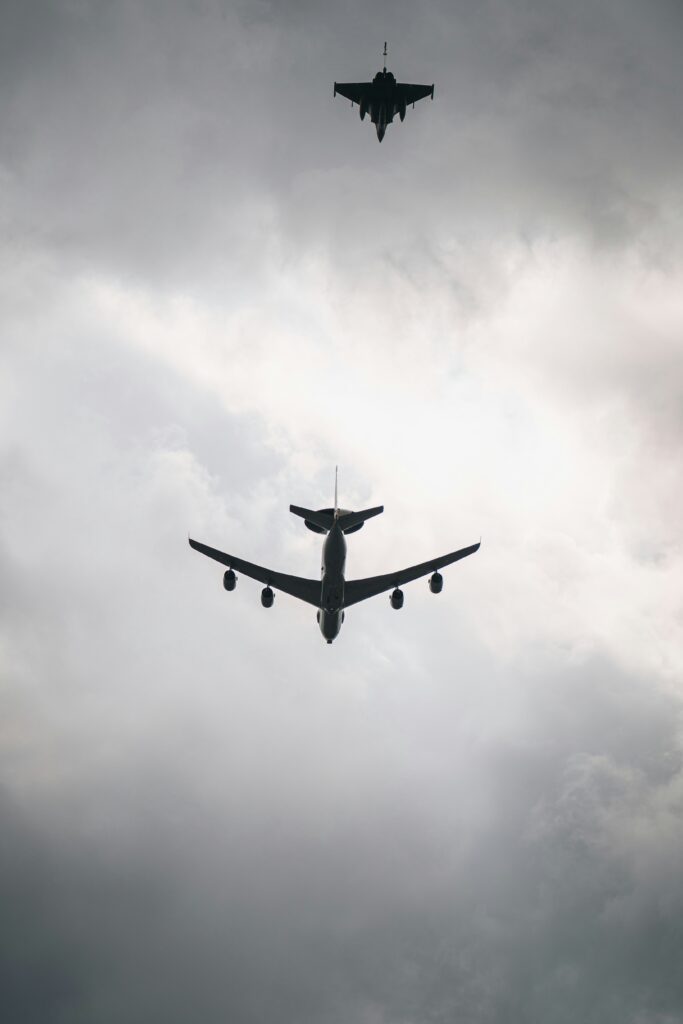
Supersonic jets have transformed military aviation and defense strategy by dramatically increasing the speed, range, and striking capabilities of air forces worldwide. Their ability to travel faster than the speed of sound enables rapid response, precise strikes, and enhanced deterrence, reshaping the way nations plan and execute military operations.
Origins of Supersonic Flight
Supersonic flight became a reality in the mid-20th century, with aircraft like the Bell X-1 breaking the sound barrier in 1947. Military adoption followed soon after, with fighters and bombers designed to exploit the advantages of high-speed flight. Early supersonic jets emphasized interception, reconnaissance, and rapid strike missions, changing the dynamics of aerial combat.
Enhanced Response and Strategic Reach
Supersonic jets allow for rapid deployment across large distances, providing nations with the ability to respond quickly to emerging threats. This capability extends the strategic reach of air forces, enabling them to project power far from home bases and support allies in multiple theaters of operation.
Influence on Air Combat Tactics
The advent of supersonic jets transformed air combat tactics. High-speed maneuvers, rapid interception, and beyond-visual-range missile engagements became central strategies. Pilots now rely on advanced avionics, radar, and targeting systems to maintain situational awareness while operating at extreme speeds.
Impact on Deterrence and Defense Posture
Supersonic jets enhance national defense by acting as a credible deterrent. Their speed and agility allow for swift retaliation, making potential aggressors reconsider hostile actions. Nations often integrate supersonic aircraft into layered defense systems, combining them with missile defenses, radar networks, and surveillance assets.
Integration with Modern Warfare Technologies
Modern supersonic jets are increasingly integrated with stealth, electronic warfare, and networked combat systems. This combination allows for coordinated operations, minimizing vulnerabilities and maximizing the effectiveness of both offensive and defensive strategies. Supersonic platforms can work alongside drones, satellites, and ground-based systems to dominate the battlespace.
Challenges and Limitations
Despite their advantages, supersonic jets face challenges, including high operational costs, fuel consumption, and maintenance demands. Their speed can limit maneuverability in certain scenarios, and advanced air defense systems pose significant threats, requiring continuous innovation in tactics and technology.
Future Developments
The future of supersonic military aviation includes hypersonic aircraft capable of exceeding Mach 5, advanced stealth integration, and AI-assisted flight systems. These developments will further enhance speed, survivability, and operational effectiveness, ensuring supersonic jets remain a critical component of modern defense strategies.
Conclusion
Supersonic jets have profoundly influenced defense strategy by enabling rapid response, extending strategic reach, and enhancing deterrence. As technology continues to advance, these high-speed aircraft will remain essential to national security, shaping the future of aerial combat and strategic military planning.